
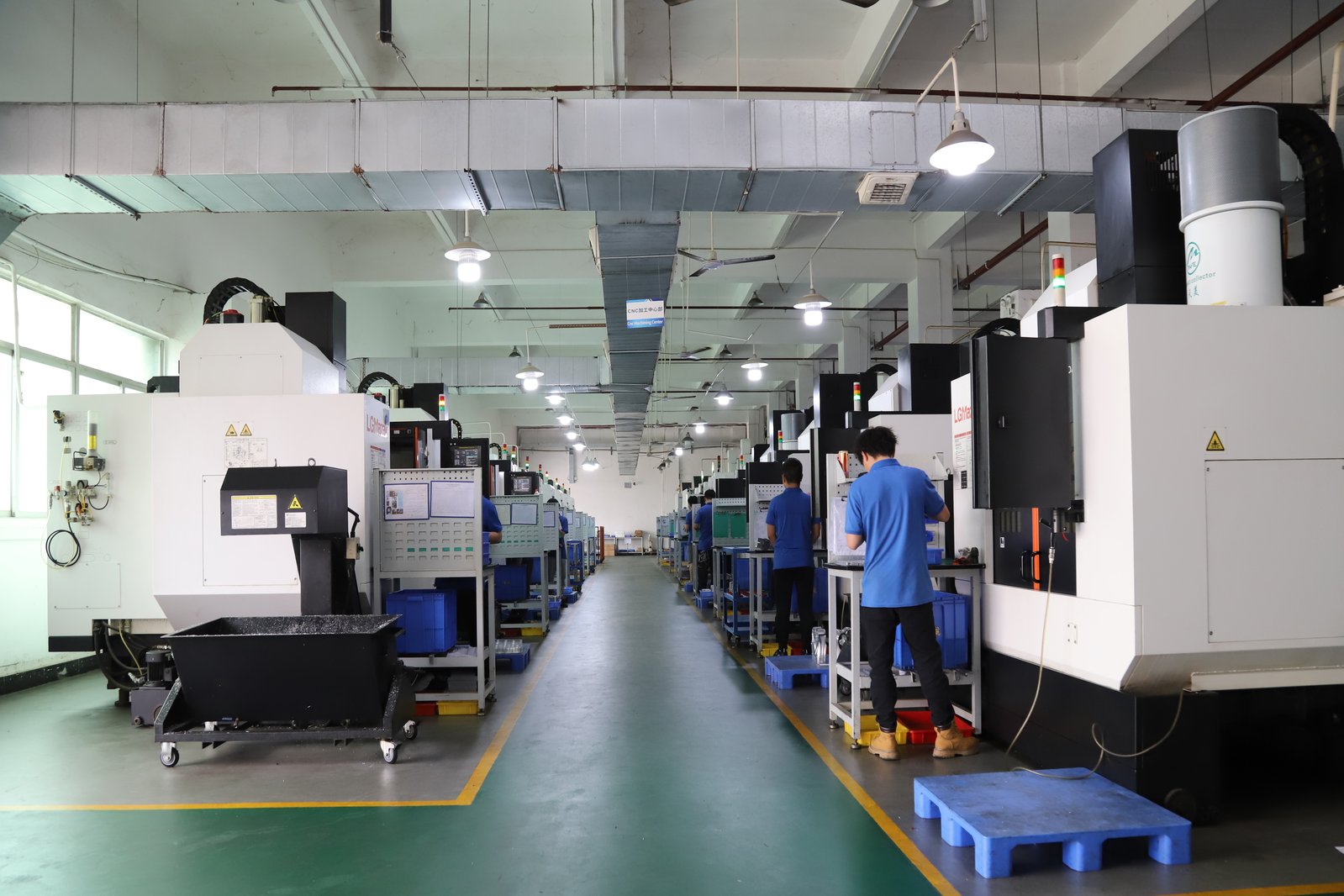
Aluminum or stainless steel is the first material decision on most precision machined parts, and it is the one buyers most often resolve by habit rather than analysis. The habits are not wrong, but they are coarse: both families span wide property ranges, and the right choice for a bracket, a housing, a shaft or a fitting depends on the load, the environment, the finish and the quantity. This guide compares the two families on the axes that decide machined parts and ends with a decision framework you can run against your own drawing before it reaches a machining factory, and settle before it becomes a purchase order.
What are you deciding between aluminum and stainless?
The two families are not opposites; they are different answers to the same engineering questions. Aluminum offers low density, good thermal and electrical conductivity, and excellent machinability, at the cost of lower strength per unit volume than steel and a surface that needs protection in many environments. Stainless offers strength, corrosion resistance and a hard, wear-tolerant surface, at the cost of roughly three times the density and a machining process that is slower and harder on tooling. The decision is a trade between weight, environment, strength, finish and cost, and it is rarely settled by one property alone.
It is also worth deciding within the families, not just between them. "Aluminum" ranges from 6061-T6 — the balanced workhorse — to 7075-T7351, which on a strength-to-weight basis exceeds many steels. "Stainless" ranges from free-machining 303 to corrosion-resistant 316L to precipitation-hardened 17-4PH, which reaches hardness and strength far beyond the austenitic grades. A buyer who compares "aluminum versus stainless" as if each were one material is leaving most of the decision unmade; the grade and condition do the real work.
Aluminum grades for machined parts: which one does what
6061-T6 is the default aluminum for machined parts and the right starting point for most brackets, housings, covers and fittings. It machines cleanly, holds tolerances well, anodizes nicely, and is stocked everywhere in plate and bar, which keeps both cost and lead time down. 7075-T6 and -T7351 step up the strength for stressed sections, but the stock costs more and the stress-relieved condition matters on thin machined-away geometry, or the part will move after cutting. 6063 is the extrusion alloy, used where a part begins as an extruded profile rather than bar or plate.
For parts that will be anodized, the alloy choice changes the result: 6061 anodizes to a clean, consistent finish, while high-copper alloys such as 2024 anodize poorly and are usually left natural or painted. Where the design calls for maximum strength-to-weight in a machined part — an aerospace bracket, a robotics arm — 7075 in a stress-relieved condition earns its premium. Where the part is a straightforward housing carrying modest load, 6061-T6 delivers the function at the lowest cost and the shortest lead time, which is why it dominates the category.
Stainless grades for machined parts: which one does what
304 is the stainless baseline — the grade behind most stainless machined parts that do not need the extra corrosion resistance of molybdenum-bearing grades — and it machines with moderate tool wear. 316L adds molybdenum for marine and chemical environments, at a higher material cost and a stickier machining behavior. 303 is the free-machining variant, sulfur added for chip control, which makes it the economical choice for high-volume stainless turning where the application does not demand the corrosion or weldability of 304. 17-4PH is the precipitation-hardened workhorse: machined soft in Condition A, then aged to H900–H1150 for strength and hardness the austenitic grades cannot reach.
The grade decision inside stainless usually follows the environment and the mechanical demand. If the part faces salt, chemicals or repeated cleaning, 316L justifies its premium. If it is a high-volume turned component in a benign environment, 303 keeps the cycle time and tooling cost down. If it needs the strength of a hardened component — a shaft, a valve stem, a fastener — 17-4PH is the answer, with the heat-treat step and its certified partner named on the drawing. Each grade trades cost, machinability and corrosion resistance differently, and the drawing should name one rather than leaving the choice to the shop.
| Material | Typical strengths | Watchpoints for machined parts |
|---|---|---|
| 6061-T6 | Balanced strength, excellent machinability, low cost | Anodize for wear and appearance; soft surface marks easily |
| 7075-T7351 | High strength-to-weight for stressed sections | Costlier stock; stress-relieved condition required on thin sections |
| 303 stainless | Free-machining, economical turning | Lower corrosion resistance than 304; not for welding |
| 304 / 316L | Corrosion resistance; 316L for marine and chemical | Slower machining, more tool wear; 316L costs more |
| 17-4PH (H900–H1150) | Hardened strength beyond austenitic grades | Heat-treat step and certified partner required |
Strength, weight and stiffness: where the numbers land
On a strength-to-weight basis aluminum is competitive or better than stainless at the alloy extremes — 7075-T6 has a higher specific strength than many stainless grades — which is why aerospace and robotics parts favor it wherever mass matters. On stiffness and hardness the comparison flips. Steel is roughly three times stiffer than aluminum at the same geometry, so a deflection-limited part in aluminum may need thicker sections or ribs, and a bearing surface or wear face in aluminum will not survive contact that stainless shrugs off. The load path decides which property is actually being bought.
Watch the modulus trap when geometry is thin. Because aluminum is one-third the stiffness of steel, a thin aluminum wall that must carry a bending load either thickens or flexes, and thickening an aluminum section can erase the weight saving while adding machining time. Where a design is stiffness-limited rather than strength-limited, the comparison should run on the finished geometry's deflection, not on the raw material's strength data. A part that keeps flexing in aluminum has already decided its own material.
Corrosion, temperature and surface finish: where the difference shows
Corrosion resistance is the reason most buyers default to stainless, and the nuance is that both families need the right grade and the right finish. Bare aluminum corrodes in many environments and is normally anodized or coated; stainless is corrosion resistant by composition but can still be attacked in chloride environments unless it is the molybdenum-bearing grade. Temperature is the second axis: aluminum loses strength quickly as temperature rises, while stainless holds its properties far higher, which is why hot-side parts go stainless regardless of the weight argument.
Surface finish is where the two families diverge in machining practice. Aluminum turns and mills to a fine finish easily and anodizes into a hard, colored surface that suits both wear and appearance. Stainless takes more care — speeds and feeds tuned to avoid work-hardening and tearing — and finishes with passivation or electropolishing rather than anodize. A buyer with a visible, cosmetic part may choose aluminum for the anodize palette; one with a part that must survive chemicals may choose 316L for the composition. The finish and environment requirements are not the last consideration; they are often the deciding one.
Machinability and cost: how the families compare on the factory floor
Two quieter properties deserve a mention before the choice is locked. Aluminum is non-magnetic and a good electrical and thermal conductor, so it appears in housings that must not disturb magnetic fields and in parts that carry or shed heat; the austenitic stainless grades are also non-magnetic in the annealed condition, while the martensitic and precipitation-hardened grades are not, and machined parts can pick up slight magnetism from work-hardening. If the part sits near a sensor, a coil or a magnetic assembly, name the magnetic requirement in the drawing and let it help settle the family.
Aluminum is the easiest metal a CNC machine cuts — high speeds, low tool wear, predictable chips — which shows up directly in the quote as shorter machining time and cheaper tooling. Stainless is slower on both counts: the austenitic grades work-harden if the cut is timid, so they demand consistent engagement, and tool wear is higher, showing up as more machine time and a higher cost per part. For the same geometry, a stainless part typically quotes higher than an aluminum one on machining alone, before the raw material difference is added.
Tolerance behavior follows the same pattern. Aluminum is dimensionally forgiving, so holding ±0.003 mm on milling and turning is generally more routine on aluminum features. Stainless demands more of the process — consistent speeds and feeds, sharp tool geometry, attention to heat — so a tight feature in stainless should be expected to carry more process care and a first-article verification before the lot runs. The higher stainless quote is not a reason to avoid the material; it is a reason to be sure the stainless properties are actually needed before paying for them.
Finishing after machining: anodize versus passivation and beyond
Aluminum parts are usually finished by anodizing — standard anodize for corrosion resistance and appearance, hard anodize for a wear-resistant surface measured in microns of coating. The anodize layer grows from the surface, so a tightly toleranced bore anodized after machining changes size unless the drawing accounts for the coating, and the alloy choice affects finish consistency. Stainless parts are passivated to remove free iron and restore the corrosion-resistant surface, or electropolished for a bright finish, and they do not take dye the way anodized aluminum does.
Where wear is the driver, hard anodize on aluminum competes directly with the natural hardness of stainless. A hard-anodized aluminum part gains a wear-resistant surface at low mass, so the two options appear side by side on many designs — the choice then comes down to environment and impact tolerance, because hard anodize is a coating that can chip under a sharp impact where stainless deforms. If the application risks impacts, the bare metal's toughness may matter more than the coating's hardness.
A decision framework for the material before the order reaches the factory
Material changes are cheap at the drawing stage and expensive after it. Changing the material on a released part can restart machining-time estimates, tooling selection, surface-finish callouts and corrosion assumptions, so the review of aluminum versus stainless belongs early in the design — ideally before the drawing is finalized for quoting. A part quoted, approved and ordered in one material, then switched to the other, pays for the change twice: once in the re-quote and once in the schedule it displaces.
Work the choice as a sequence of questions rather than a preference. First, the environment: will the part face corrosion, chemicals, salt or repeated cleaning? If yes, stainless — with 316L where the exposure is aggressive. Second, the mechanical demand: strength-to-weight, stiffness, hardness or temperature? Aluminum alloys cover the first, stainless covers the rest, and 17-4PH covers the high-strength stainless cases. Third, the finish: color, wear, appearance? Aluminum with anodize, or stainless bare or electropolished. Fourth, the quantity and cost structure: quote both families and read the gap against the property you need.
Finally, name the grade, the condition and the finish spec on the drawing — 6061-T6 versus 7075-T7351, 304 versus 316L versus 17-4PH H900 — because the factory machines and certifies what the drawing says, and a drawing that says only "aluminum" or "stainless" delegates the decision to the cheapest interpretation. A precision machining factory will source, machine, certificate and finish whatever the drawing names; the quality of the material decision is the buyer's to make, and this framework is how to make it deliberately instead of by habit. Decide before the order, and the DFM review the factory returns will confirm the choice rather than challenge it — the material that survives review is the one that was chosen deliberately.
If the two families remain genuinely close after the analysis — similar weight, similar environment, similar cost at your quantity — then the decision has moved out of the material's hands and into the supply chain's: choose the one the factory holds in stock, has certified tooling experience with, and has quoted before, because availability and process familiarity are properties too, and they ship with every order.
Frequently Asked Questions
Should my precision machined part be aluminum or stainless?
Work the environment, the mechanical demand and the finish in order. Corrosion, chemicals or repeated cleaning point to stainless (316L for aggressive exposure); strength-to-weight and low mass point to aluminum; hardness and temperature tolerance point to stainless. Quote the same drawing in both and read the cost gap against the property you need.
Which aluminum grade is best for machined parts?
6061-T6 for most brackets, housings and fittings — balanced properties, excellent machinability, clean anodizing and wide stock availability. 7075 in a stress-relieved condition for high-strength, thin-section parts where the premium is justified by the load.
Which stainless grade should I choose?
304 as the baseline, 316L where salt or chemicals demand the extra corrosion resistance, 303 for high-volume free-machining turning in benign environments, and 17-4PH where a hardened, high-strength part is required. Name the grade and condition on the drawing.
Is stainless always stronger than aluminum?
Not on a strength-to-weight basis — 7075-T6 aluminum has a higher specific strength than many stainless grades. But stainless is roughly three times stiffer and much harder, so deflection-limited and wear-limited parts favor it. The load path decides which property you are buying.
Does stainless cost more to machine than aluminum?
Typically yes — stainless runs slower, work-hardens if the cut is timid, and wears tools faster, so machining time and tooling cost rise, and the raw material costs more. Quote both families on the same drawing to see what the stainless option is actually buying for your part.
Can I anodize stainless steel?
No. Anodizing is an aluminum process; stainless is passivated or electropolished instead. If the part must take a colored anodize finish, that is an aluminum decision; if it must look like bare stainless, that is a stainless decision.
Does anodizing change machined dimensions?
Yes — the coating grows from the surface, so a tightly toleranced feature anodized after machining changes size unless the drawing accounts for it. Name the finish class and any thickness requirement so the factory machines to the finished size, not the pre-coat one.
Weighing aluminum against stainless on a machined part?
Email the STEP or IGES model with your toleranced 2D drawing to [email protected] or call +86 13126536955. Ask for the part quoted in both families and you will see the cost gap next to the property difference. See the parts page for the material range and examples, and the quality system page for how material and finish certificates ship with the parts.