
- Dongguan Zhuohang Ltd, founded 2005 — 6,800 m², 100+ employees, capacity that de-risks an order.
- 100+ production machines; milling to 1300 × 700 × 600 mm, turning to Ø720 × 1280 mm — redundancy on the floor.
- ISO 9001 + IATF 16949 + ISO 14001 — certificates that de-risk the chain.
- No. 8, Shuibian Songyuan Road, Hengli Town, Dongguan, Guangdong, China 523470.
How does real capacity reduce your risk?
Capacity is the first risk control, because it means your order does not stop when one machine does. The floor holds 100+ production machines — 3-axis (50+), 4-axis (20+), and 5-axis (20+) centers, 25+ lathes, and 7+ grinders — across 6,800 m². That breadth lets a job be routed around a down machine and absorb a demand spike, which a small shop or a trading desk simply cannot do.
your question is not "how many machines" but "what happens when one stops." Routing capacity — the ability to move a job to the next machine — is what keeps your order moving through a breakdown or a demand spike. A floor with 100+ machines has that path; a floor with a handful does not, and the difference shows up on your delivery date.
How does the workforce stabilize your supply chain?
A stable, experienced workforce removes the variability that causes scrap and rework — the same variability that becomes supply chain risk. The plant employs 100+ people, over 80% skilled technicians, and over 60% with five to ten years at the company. Experience that stays is the difference between a process that holds tolerance consistently and one that drifts with every new hire.
What certificates de-risk the factory?
Three certificates, all issued to Dongguan Zhuohang Ltd: ISO 9001:2015 (116024/A/0001/UK/En), IATF 16949:2016 (131941/A/0001/SM/En), and ISO 14001:2015 (116024/B/0001/UK/En). The IATF 16949 scope excludes product design under Clause 8.3 — a build-to-print manufacturer, stated honestly. Verifiable numbers mean the risk check is cheap: confirm with the registrar and move on.
How does material control protect your supply chain?

Material control stops the invisible failure — the wrong alloy — at the door. Every incoming lot here is XRF-checked against its mill certificate, and the MES/ERP system traces raw material source and usage, process parameters, machine data, batch, operator, and inspection results on every lot. That chain means a material problem can be contained to a specific lot, not discovered at your customer.
How does the inspection bench de-risk shipments?
The bench is the same class of equipment a buyer would use to audit the plant — Hexagon GLOBAL S CMMs, vision measuring machines, a gear measuring center, a KEYENCE VK-X3000 laser microscope, a SURFCOM 1800D, XRF material analysis, hardness testers, and salt-spray and tensile testers. In-house verification means documented evidence ships with the parts, so a failure can be traced to a cause instead of argued about.
Why does in-house matter? Because a supplier that sends inspection out the door sends your evidence out the door too — slower, less accountable, and one more handoff where a measurement can be lost. In-house verification means the report ships with the part, on the same schedule, under the same roof.
How does the factory protect your intellectual property?
IP protection is physical and procedural. Sensitive paper files are kept in an access-controlled space, electronic data lives on encrypted drives, drawings are never shared without written permission, and an NDA is signed and returned if you provide one. A factory whose business is machining — not reselling designs — has no incentive to compromise your IP, and the controls make it hard even if someone tried.
What industries does the factory serve at scale?
The factory machines parts for automotive, robotics, electronics, medical, and automation equipment, in aluminum, stainless steel, carbon and alloy steel, brass, copper, titanium, magnesium, and engineering plastics. Domestic and overseas customers together exceed 100, with annual output above 1,000,000 pieces — a volume that only a real plant can sustain, and a customer base that would not tolerate the risk a trading desk carries.
Which factory fact removes which risk?
Map the floor facts to the supply chain risks they neutralize:
| Factory fact | Risk it removes | |
|---|---|---|
| a floor of 100-plus machines across 6,800 m² | A single machine failure stopping your order±0.003 mm milling / ±0.002 mm turning, ±0.002 mm grinding | Parts that fail a tolerance at your bench |
| XRF at receiving + MES/ERP traceability | The wrong-alloy failure that passes dimensions | |
| ISO 9001 + IATF 16949 + ISO 14001 | An unaudited, unverifiable supplier | |
| MOQ 1 piece | An untested backup source |
What should you ask before the factory earns the order?
Four questions put the risk on the table before the purchase order:
- Walk the floor by video — show me the machines that will run my part, and count them.
- Show me the certificate numbers and the scope, including what IATF 16949 excludes.
- Show me how incoming material is checked, and what instrument does the checking.
- Run one part first, at the MOQ, with full documentation, before we commit volume.
What machines, in what count, run on the floor?
Capacity is a claim until it is a list. The floor here is a nameable list of machines, not a brochure phrase, and the count matters because redundancy lives in the count — if one machine is down, the job routes to the next of its kind:
| Process | Count | Max workpiece | Brands |
|---|---|---|---|
| 3-axis milling | 50+ centers | 1300 × 700 × 600 mm | Mazak, Brother |
| 4-axis milling | 20+ centers | 1300 × 700 × 600 mm | Mazak, Brother |
| 5-axis milling | 20+ centers | 1300 × 700 × 600 mm | Mazak |
| CNC turning | 25+ lathes | Ø720 × 1280 mm | TSUGAMI, Citizen, Star |
| Mill-turn | Multi-task centers | Single-setup geometry | Mazak, Brother |
| Grinding | 7+ (surface / centerless / cylindrical) | ±0.002 mm finishes | — |
The reason a count beats a brand is the same reason a fleet beats a single car: uptime. One 5-axis center is capability; twenty is capability plus a spare path. When you audit a factory, do not ask "do you have 5-axis" — ask "how many, and which one runs my part when the first is down." The answer separates a plant from a trading desk faster than any brochure.
Which instruments verify what, and why in-house?
Inspection is only as strong as the instrument behind it, and in-house is only as strong as the instrument being in-house for the right reasons. A supplier that sends inspection out the door sends your evidence out the door too — slower, less accountable, and one more handoff where a measurement can be lost. Here the bench sits on the same floor as the machines:
| Instrument | What it verifies | Why it matters |
|---|---|---|
| Hexagon GLOBAL S CMM | Dimensional values on critical features | Turns tolerance into a measured fact |
| Vision measuring machine | Fast 2D feature verification | Checks profiles and positions |
| Gear measuring center | Tooth profile and lead | Verifies gear geometry |
| KEYENCE VK-X3000 laser microscope | Surface finish and profile at scale | Reads Ra and micro-geometry |
| SURFCOM 1800D | Surface roughness | Confirms the Ra the function needs |
| XRF (iCHEQ) spectrometer | Elemental composition | Catches a substituted alloy at the door |
Why does in-house matter more than the instrument's brand? Because evidence that ships on the same schedule, under the same roof, is evidence you can hold someone accountable for. Outsource the measurement and you have added a vendor to the one thing you most need to trust.
How does third-party surveillance keep the system honest?
Certificates are not a one-time award; they are a standing invitation for a third party to walk the floor. ISO 9001, IATF 16949, and ISO 14001 each come with a registrar that audits the system on a recurring cycle — checking that the documented process is the process actually run. That surveillance is the cheapest risk check you can lean on, because it means someone else is already watching the things you would want to check.
your job is to verify the certificate is real and the scope is honest. A certificate has a number you can confirm with the registrar, and a scope that says exactly what it covers. Here the IATF 16949 scope excludes product design under Clause 8.3 — a build-to-print manufacturer, stated plainly. A supplier that states its scope honestly is a lower risk than one that waves a certificate without letting you read it, because over-promising is itself a risk signal.
That is the practical use of certification in a risk review: not a trophy on the wall, but a standing, third-party surveillance program you can read and confirm before you commit.
How does the material flow from dock to dock protect your order?
Risk is manufactured at the boundaries where a part changes hands. The fewer boundaries, the fewer chances for a mixed lot, a dropped tolerance, or a lost document. Here the part moves from receiving, through XRF verification, to machining, to inspection, to shipping — all on one 6,800 m² floor. There is no third-party custody between the raw bar and the finished box.
The flow matters because each station is a control point, not just a step. Receiving checks chemistry against the mill certificate; machining records the machine, operator, and parameters; inspection records the measured values; shipping documents the lot. The result is a part that arrives with its history attached, which is the difference between a supply chain you can audit and one you can only trust.
What this shop actually runs
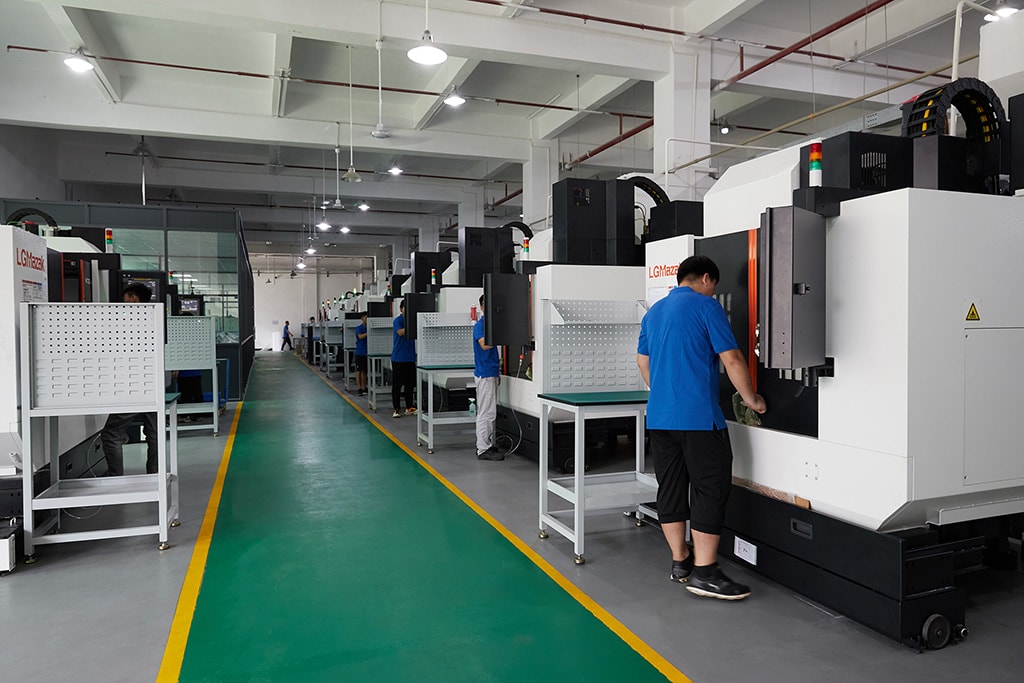
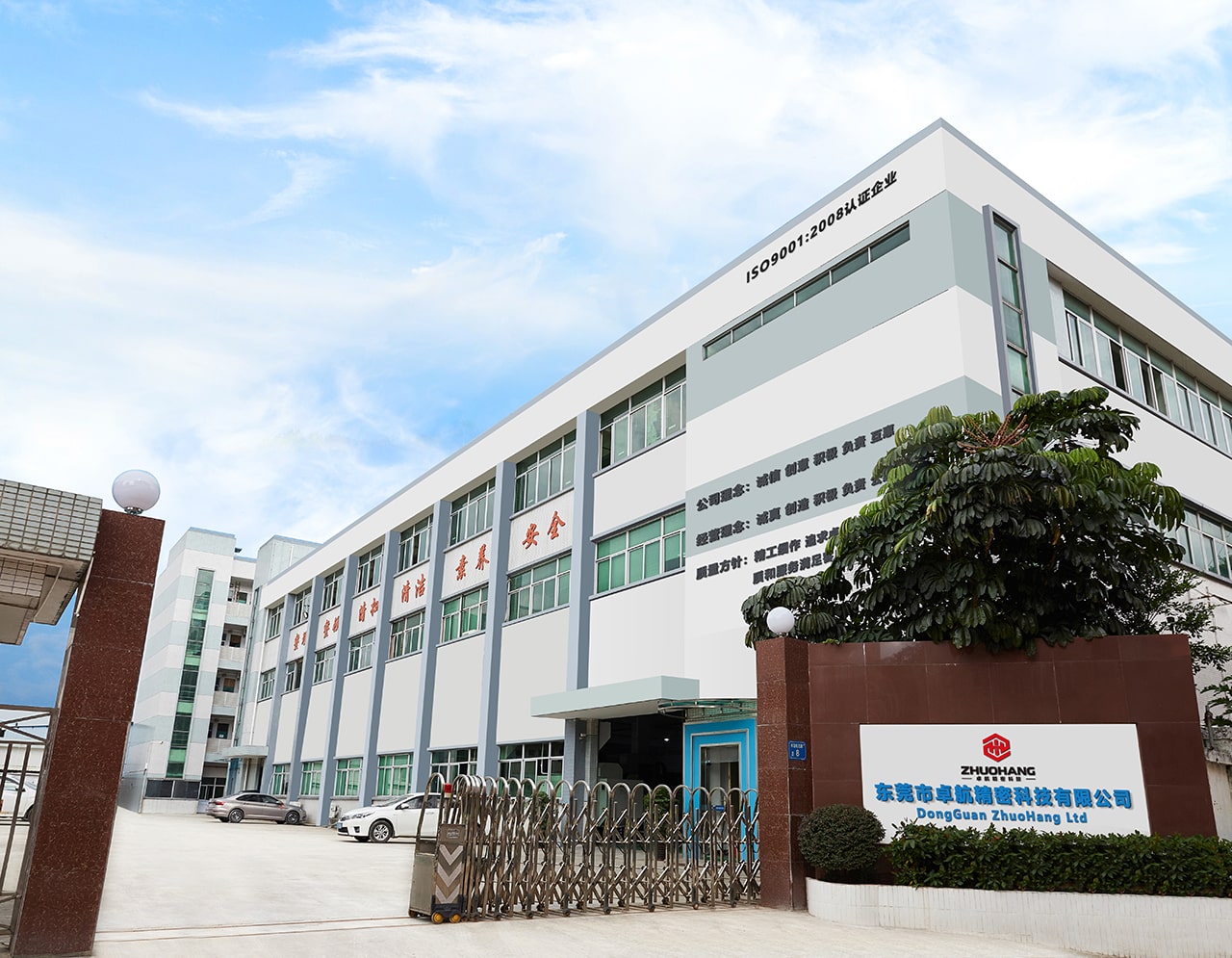
If you ask for capability evidence, you deserve a specific answer. This facility operates 100+ CNC machines across 6,800 m2 in Dongguan, China, staffed by 100+ people. The machines, listed by category:
- 5-axis machining centres (10+) - Mazak VARIAXIS I-600 (510/910/510 mm travel, 12,000 rpm, 22 kW, 71.6 N·m, 30-tool BT40) and Mazak INTEGREX I-250H S (B-axis 0.0001°, 24 kW, 124 N·m, 38-tool HSK-A63). Typical work: compound-angle parts, single-setup multi-face prismatic work, and aerospace fittings where datum transfer loss is unacceptable.
- 3-axis / 4-axis machining centres (50+) - Brother SPEEDIO S500Z2N / S700Z2N (10,000 rpm, 14/21-tool ATC, 0.7 s tool-to-tool, Z-axis 2.2 G) and Mazak VCE-430A L / VCE-570C L (10,000 rpm, 118 N·m, 24-tool ATC). Typical work: prismatic parts, plates, brackets, housings.
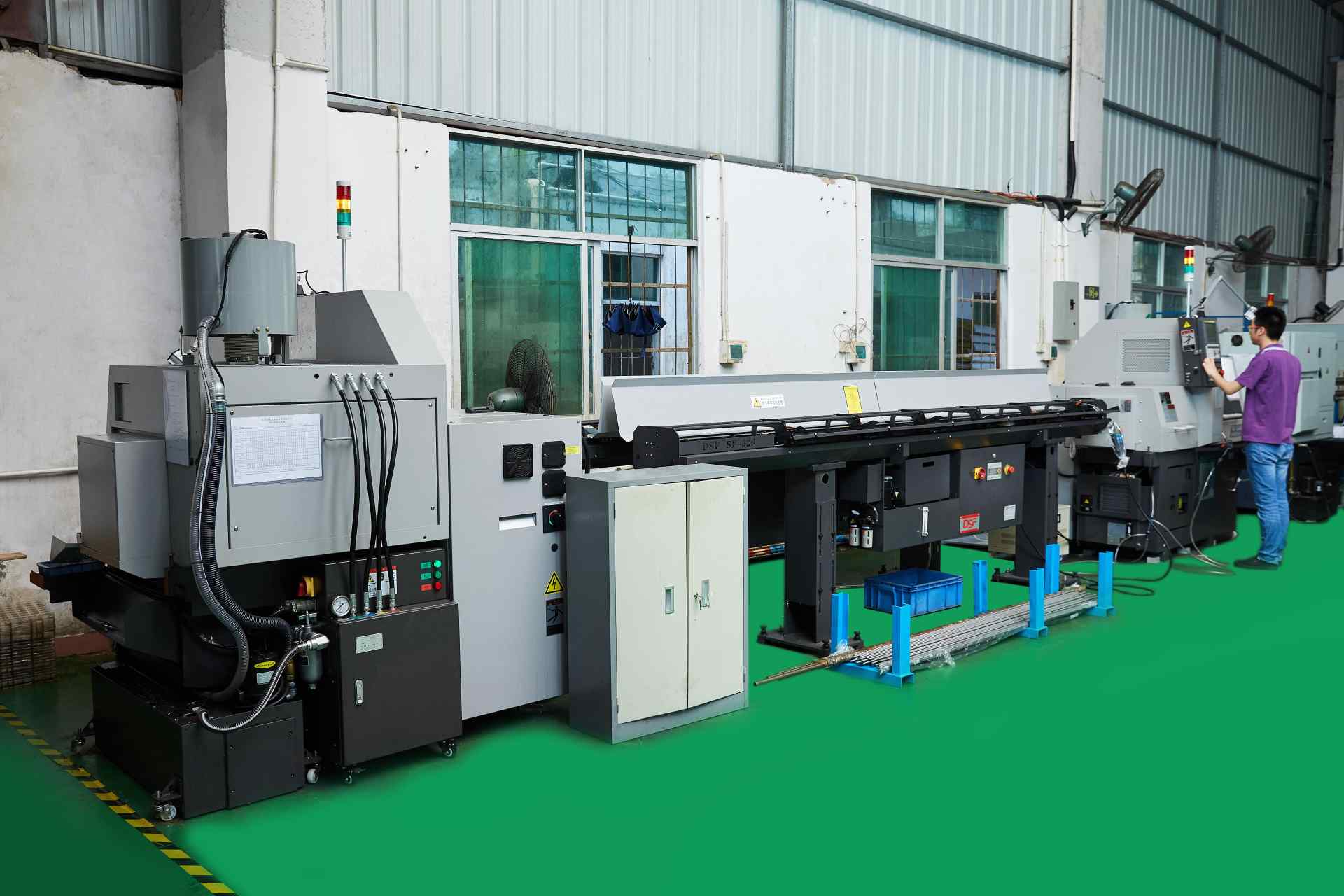
- Swiss-type turning centres (10+) - Citizen Cincom A20-3F7 (Φ20 mm, 10,000 rpm), TSUGAMI B0206-III / B0205-III (Φ20 mm, 0.1 µm), STAR SR-32JII / SR-32J Type N (Φ32 mm, 8,000 rpm). Typical work: long, slender rotational parts at ±0.002 mm.
- CNC turning centres (20+) - HEADMAN T70M/1250 (720 mm swing, 117 mm bore, 3,000 rpm, BMT75 12-station turret). Typical work: shafts, bushings, flanges up to ±0.002 mm.
- Wire EDM (5+) - Sodick AQ535L (550/350/300 mm travel, ±20° taper, 800 kg workpiece). Typical work: hardened tool steel, internal splines, sharp internal corners that milling cannot reach.
- Inspection: Hexagon CMM + 20+ gauges - Hexagon CMM for coordinate measurement, plus vision system, profilometer, hardness tester, coating thickness gauge, XRF for material verification. The 10:1 rule (gauge 10x more accurate than the band) is applied to every feature.
- Machine highlights - VARIAXIS I-600: one-setup multi-face 5-axis + MAZA-CHECK auto-calibration; INTEGREX I-250H S: DONE-IN-ONE mill-turn, B-axis 0.0001° + Ai thermal shield; SPEEDIO S500Z2N / S700Z2N: Z-axis 2.2 G + 0.7 s ATC; Swiss-type: guide-bush switchable + 0.1 µm resolution.
Tolerance bands: ±0.003 mm milled, ±0.002 mm turned, ±0.002 mm ground or wire-cut. Capability indices: Ppk >= 1.67 at the initial study; Cpk >= 1.33 ongoing in production.
Certifications: ISO 9001:2015 (116024/A/0001/UK/En) · IATF 16949:2016 (131941/A/0001/SM/En, design clause 8.3 excluded) · ISO 14001:2015 (116024/B/0001/UK/En), held by Dongguan Zhuohang Ltd (USCC 91441900MA4UWT6X39, since 2005).
Service area: we supply Austria, Belgium, the Czech Republic, Denmark, France, Germany, Greece, Hungary, Ireland, Italy, the Netherlands, Spain, Sweden and the United Kingdom in Europe; Brazil, Canada, Mexico and the United States in the Americas; China, Israel, Japan, Singapore and Sri Lanka in Asia; Australia and New Zealand in Oceania; and South Africa in Africa, with worldwide delivery from China.
Contact: Felipe Iglesias, [email protected], +86 13126536955.
Ready to machine your parts?
Send your drawing to [email protected] or call +86 13126536955 for a quote.
Frequently Asked Questions
Who is the entity behind the factory?
In short, Dongguan Zhuohang Ltd, brand Zhuohang Precision Machining Factory, founded 2005 at No. 8, Shuibian Songyuan Road, Hengli Town, Dongguan, Guangdong, China 523470 — 6,800 m² and 100+ machines of capacity that de-risks an order.
What certificates does the factory hold?
In short, ISO 9001:2015 (116024/A/0001/UK/En), IATF 16949:2016 (131941/A/0001/SM/En), and ISO 14001:2015 (116024/B/0001/UK/En), all issued to Dongguan Zhuohang Ltd, with IATF 16949 excluding design under Clause 8.3, a build-to-print manufacturer.
How does capacity reduce supply chain risk?
a floor of 100-plus machines across 6,800 m² let a job be routed around a down machine and absorb a demand spike, so one failure does not stop your order. Capacity is the first line of defense against single-supplier dependence.
How does the factory protect my drawings?
Drawings are never shared without written permission, an NDA is signed and returned if you provide one, and sensitive files are kept in access-controlled storage with electronic data on encrypted drives.
What machine brands run on the floor?
A floor of Mazak, Brother, Citizen, Star, and Tsugami machines is redundancy you can see — if one machine is down, work routes to the next.
What is the largest workpiece the factory can machine?
The factory machines up to 1300 × 700 × 600 mm by milling and Ø720 × 1280 mm by turning, at ±0.002 mm and ±0.002 mm (grinding) — capacity that reduces the need to split an order across suppliers.
How does the factory absorb a demand spike?
In short, With 100+ machines across 6,800 m², a demand spike is absorbed by routing work across the floor instead of queuing it behind one machine. When one machine is down, the job moves to the next of its kind — capacity that survives the spike rather than surrendering to it.
What industries does the factory serve at scale?
In short, Automotive, robotics, electronics, medical, and automation equipment, in aluminum, stainless steel, carbon and alloy steel, brass, copper, titanium, magnesium, and engineering plastics — a spread that keeps the floor diversified and the process knowledge deep.
How can I verify the factory's identity and registration?
In short, Dongguan Zhuohang Ltd is registered under number 91441900MA4UWT6X39 at No.
Standards referenced on this page
- IATF 16949:2016 — Automotive quality management system standard
- ASTM B348/B348M-21 — Standard Specification for Titanium and Titanium Alloy Bars and Billets
- ASTM B211/B211M-19 — Standard Specification for Aluminum-Alloy Rolled or Cold Finished Bar, Rod, and Wire