
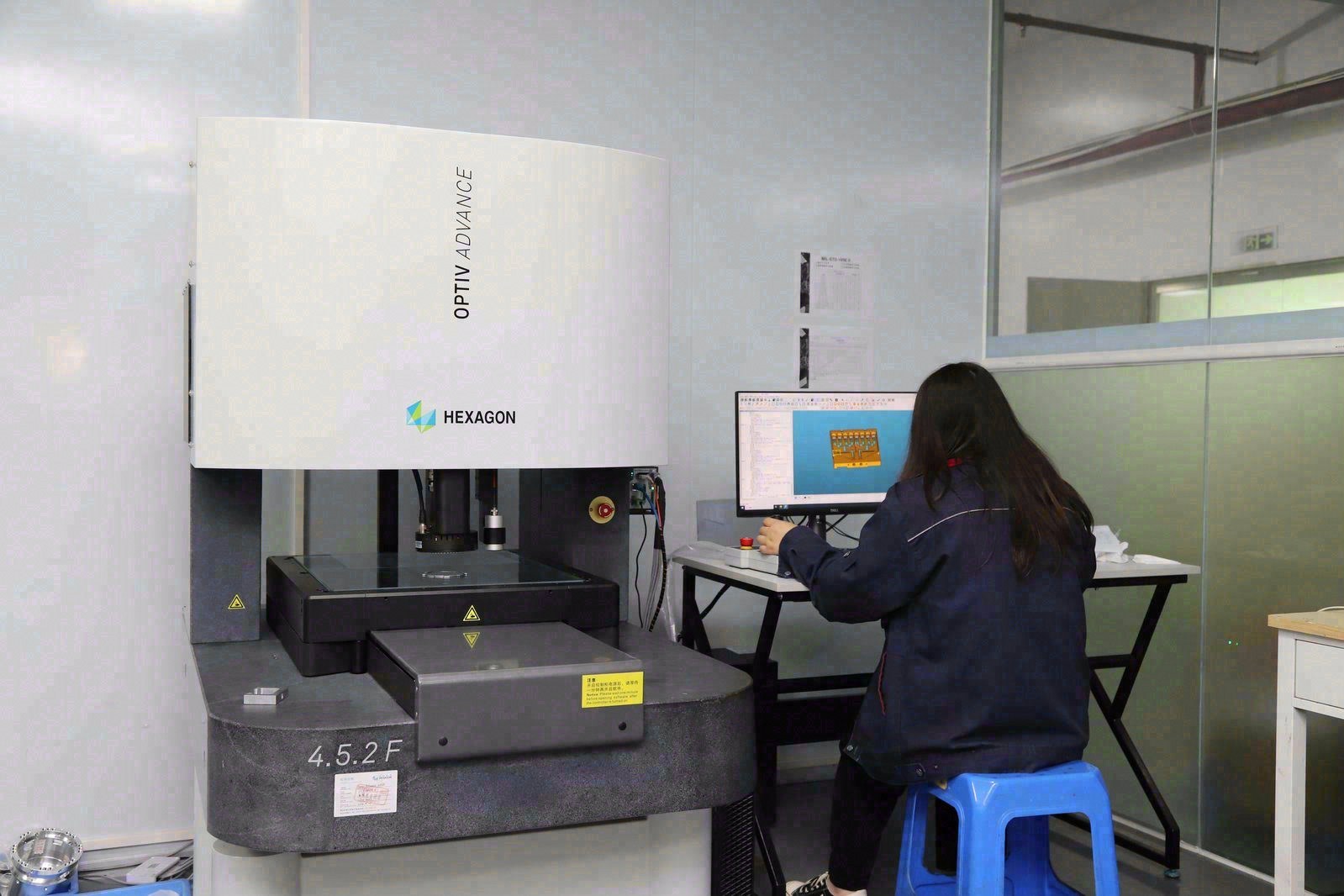
Most engineering parts begin as a question that is really about the process route: should this part be machined from solid, cast, forged, or printed? The question rarely has a universal answer, but it does have a predictable one, because the routes separate cleanly on four variables. CNC machining wins when tolerances are fine, volumes are low to moderate, and the geometry can be reached by a cutter. Casting and forging win when volume is high and the shape suits a mould or a die. Additive wins when the geometry is impossible to machine and the quantity is small. This guide walks those four variables, compares the routes against each other, and shows how a precision machining factory earns its place in the decision.
- Four variables decide: volume, tolerance, geometry, and material - and the route that wins depends on their intersection.
- Machining wins on tolerance: milled and turned features hold around ±0.003 mm, with ±0.002 mm on ground work.
- Volume is the divider: casting and forging amortize tooling over long runs; machining needs none.
- Geometry sets feasibility: internal passages suit printing; accessible features suit cutting; simple bulk suits casting.
- Material narrows the list: only some alloys are printable or castable, and the machining route takes nearly everything.
What is the vs-alternatives question really asking?
The question is rarely "which process is better" and almost always "which process makes this part, in this quantity, to this tolerance, for this cost." Every process route is excellent at something and indifferent at the rest, which is why the honest comparison starts from the part rather than from the process.
The comparison also has to be fair about the whole route. Casting and forging are usually followed by machining anyway - to hold the tolerance and the finish a drawing demands - so the real comparison is between machining from solid and machining after a near-net process. That distinction changes the numbers.
A precision machining factory that quotes against alternatives should be able to say when its route loses. A supplier that claims machining wins every part is selling, not engineering; the useful ones draw the line where the economics and the tolerances cross.
The cross can be drawn for any part type once the volume and the criticals are known, and a factory that maintains that line in its quoting is giving you a tool, not a sales pitch.
When does CNC machining beat additive for a factory part?
Machining beats additive whenever tolerance and surface decide the function. Additive processes leave a layered surface and a dimensional envelope that rarely matches machined work - around ±0.003 mm on milled and turned features is a routine promise on a machine, while a printed part usually needs machining anyway to reach a mating surface or a sealing face.
Dimensional drift is the quieter issue: a printed part can hold the size it was designed to, but batch-to-batch variation in the build leaves a spread that machined work does not, and the drawing cannot be proven until the process is.
Material cost and speed favour machining for the common alloys as well. Aluminum, steel, and stainless are cut from inexpensive stock in hours; the same part printed in a structural alloy carries a powder premium and a build-time bill that rises steeply with size.
Additive keeps its niche where geometry wins: internal cooling channels, lattice structures, and parts with no access for a cutter. For the thousands of brackets, housings, and fittings that machining already handles well, the machine is the cheaper route and usually the faster one.
Machining also wins on inspection simplicity. The measurement method for a machined feature is standard and cheap; verifying a printed surface or an internal lattice needs its own plan and its own equipment.
When does casting or forging beat machining from solid?
Casting and forging win when the volume is high enough to absorb the tooling and when the geometry suits the process. A casting replicates complex external and internal shape in one pour, and a forging aligns grain with load, which is why heavily loaded or high-volume parts often start as a near-net blank.
The honest comparison counts the machining that follows the near-net step. Almost every casting and forging still visits a machine to hold the critical tolerances and the sealing faces, so the saving is in the material and the rough shape, not in the machining itself.
The finish is usually machined or treated afterward as well, because a cast skin and a printed layer rarely carry the surface the drawing names. The near-net step saves the bulk, and the machine supplies the surface.
The crossover point is a function of quantity and material. Small series are cheaper machined from solid because there is no tooling to amortize; large series can repay a die or a pattern quickly. Asking the factory for the crossover at your quantity is how the comparison becomes arithmetic.
Do the arithmetic at two volumes, because the crossover can sit inside your own range. A bracket that is cheaper machined at two hundred parts may be cheaper cast at two thousand, and the factory that shows both numbers is the one worth keeping.
How do volume and tolerance jointly rule out routes?
Volume and tolerance act as filters before the details matter. If the part needs machined tolerances on sealing or mating features, every route ends at a machine tool, and the question narrows to how much metal arrives at that machine. If the volume is tiny, no die or mould can repay its tooling, and machining from solid or printing are the only candidates.
If the volume is large and the shape is simple, casting and forging move ahead because the near-net blank saves material and cycle time at the machine. If the volume is large and the shape is complex, casting still wins for external complexity while printing rarely scales economically.
Reading the filters in this order - tolerance, then volume, then geometry - eliminates most of the field before any detailed cost model is needed. The routes that survive the filters are the ones worth pricing.
The geometry filter deserves its own look: deep pockets and thin webs are hard for every route, and the honest suppliers will say so before the tooling is bought rather than after.
Where do secondary machining and finishing fit into non-machined routes?
A cast or printed part rarely ships as it comes out of the process. The sealing face, the press-fit bore, the threaded hole, and the fine finish all need machining after the near-net step, and the schedule and the cost of the whole route have to carry those visits to the machine.
The schedule of the whole route should show those visits as events: blank arrives, criticals are machined, finish is applied, inspection closes. A route that hides its machining steps hides its calendar.
The drawing is the map of those visits. A part with three critical machined features needs three families of machining after casting or printing, and the more critical features it carries, the smaller the advantage of the near-net start becomes.
Threads illustrate the point: a dozen tapped holes on a casting are a dozen machined features, and the drawing that lists them is the drawing that prices the machining honestly.
For the buyer this means comparing the route cost with the drawing in hand, not with a vague shape in mind. The factory that quotes both routes - solid and near-net plus machining - on the same drawing gives you the only number that matters.
How should you compare unit cost across routes honestly?
Unit cost comparisons fail when they compare different scopes. Machining from solid has no tooling line; casting has a die cost that must be spread over the run; printing has a per-part build cost that barely falls with quantity. The honest number is the total over the programme, divided by the parts.
Material yield belongs in the model. Machining from solid starts with the full volume and cuts most of it away; near-net routes start with less material and waste less, which is why the material price difference can reverse a route decision on expensive alloys.
Buying near-net blanks is one way to capture the yield without owning the process: the factory orders the forged or cast blank, machines the criticals, and the buyer enjoys the material saving without the tooling risk. It is the route comparison in miniature, done as a purchasing decision, and it is the lowest-risk way to test a near-net route before committing to the tooling for a full run.
Time-to-part belongs in the model too. Machining from solid delivers the first part in days from a drawing; casting and forging wait for tooling; printing waits for the build. When the calendar matters, the route with the earliest first article often wins even at a higher unit price.
Risk belongs in the model as a line as well. A route with an unproven first article carries a learning cost, and the schedule and the budget should hold a small allowance for the route that has not run your part before. Allowances are cheap; surprises are not.
What do prototypes and small series tell you before the route decision?
The fastest way to de-risk a route decision is to machine a prototype of the final design and measure it. The prototype proves the tolerances, the finishes, and the assembly behaviour that the process choice must deliver at volume, and it gives the cost model a real part instead of an estimate.
Measure the prototype against the drawing the volume route will have to meet. If the near-net process will feed the same criticals, the prototype should be machined to those criticals so the bridge between the routes is seamless rather than assumed.
For a casting or forging route, the prototype also validates the geometry that the tooling will replicate. A design that machines awkwardly from solid may still suit a die, and the prototype tells you which features are doing the work and which are decoration.
The prototype also settles the surface question early. If the drawing names a finish the near-net process cannot hold, the route has to include the machining step, and the prototype proves which face needs it.
Small series are the natural bridge: machine the first tens of parts from solid while the tooling is built, then transfer to the near-net route once the design is frozen and the volume is real. The bridge costs little and removes the biggest risks from the scale-up.
How do you turn the comparison into a process decision?
The decision procedure is a funnel. Start with the drawing and the volume, filter by tolerance and geometry, price the surviving routes with the same scope and the same drawing, add the tooling and the time-to-part, and choose the route with the lowest total over the programme.
- Write the criticals down. The features that need machined tolerances are the ones that drag every route back to a machine tool.
- Set the volume honestly. The route decision changes at a hundred, a thousand, and a hundred thousand parts, and the estimate should be a range.
- Confirm the material is available to the route. Not every alloy casts, forges, or prints well, and the machining route takes nearly all of them.
- Price the same drawing on the surviving routes. Same scope, same documents, same quantity - the comparison is only honest when nothing else changes.
- Add tooling and time-to-part. The total over the programme, not the unit price, is the number that decides.
A precision machining factory fits into the funnel as the reference route and as the finishing step for the others. When machining wins the total, order from the machine; when a near-net route wins, the same factory often earns the machining that follows it. Either way, the drawing and the volume decide, and the process follows the arithmetic.
Re-run the funnel when the drawing or the volume changes. A route decision is only as valid as the inputs it was made from, and parts that grow in volume or tighten in tolerance should be re-filtered rather than assumed, and the funnel costs nothing to run again.
Frequently Asked Questions
Which process route wins for a precision part?
It depends on volume, tolerance, geometry, and material. Machining wins at fine tolerances and low to moderate volume; casting and forging win at high volume with suitable geometry; printing wins for shapes no cutter can reach. The drawing decides.
Why does nearly every casting still need machining?
Because the critical tolerances, sealing faces, bores, and threads on a drawing are machined features. A near-net process supplies the shape; the machine supplies the precision, so the route comparison must include the post-process machining.
When should I choose additive manufacturing over machining?
When the geometry is impossible to machine - internal channels, lattices, or one-piece assemblies - and the volume is small enough that the build cost is acceptable. For accessible geometry in common alloys, machining is usually faster and cheaper.
How much tooling does a casting or forging route need?
A die, a pattern, or a mould, whose cost must be spread over the run. That is why near-net routes only win at volume, and why small series are usually cheaper machined from solid.
Is machining from solid wasteful on expensive materials?
It can be. Machining starts with the full block and cuts much of it away, so on titanium and the nickel alloys a near-net blank can save real material cost. The crossover depends on the alloy price and the part geometry.
Can a prototype tell me which route to choose?
Yes. Machining a prototype of the final design proves the tolerances and finishes the route must deliver at volume, gives the cost model a real part, and validates the features before the tooling is committed.
What is the fairest way to compare route costs?
Price the same drawing on each surviving route, with the same scope and quantity, then add the tooling and the time-to-part. The total over the programme decides; a unit price alone cannot.
Want the route comparison priced on your drawing?
Send the drawing and your volume range and ask for the machining route priced alongside the near-net alternatives on the same scope. Contact the Precision Machining Factory team to run the funnel.